Theo Simon · 16 October 2026
How Advanced Filtering Options Transform Daily Task Management in Note Applications
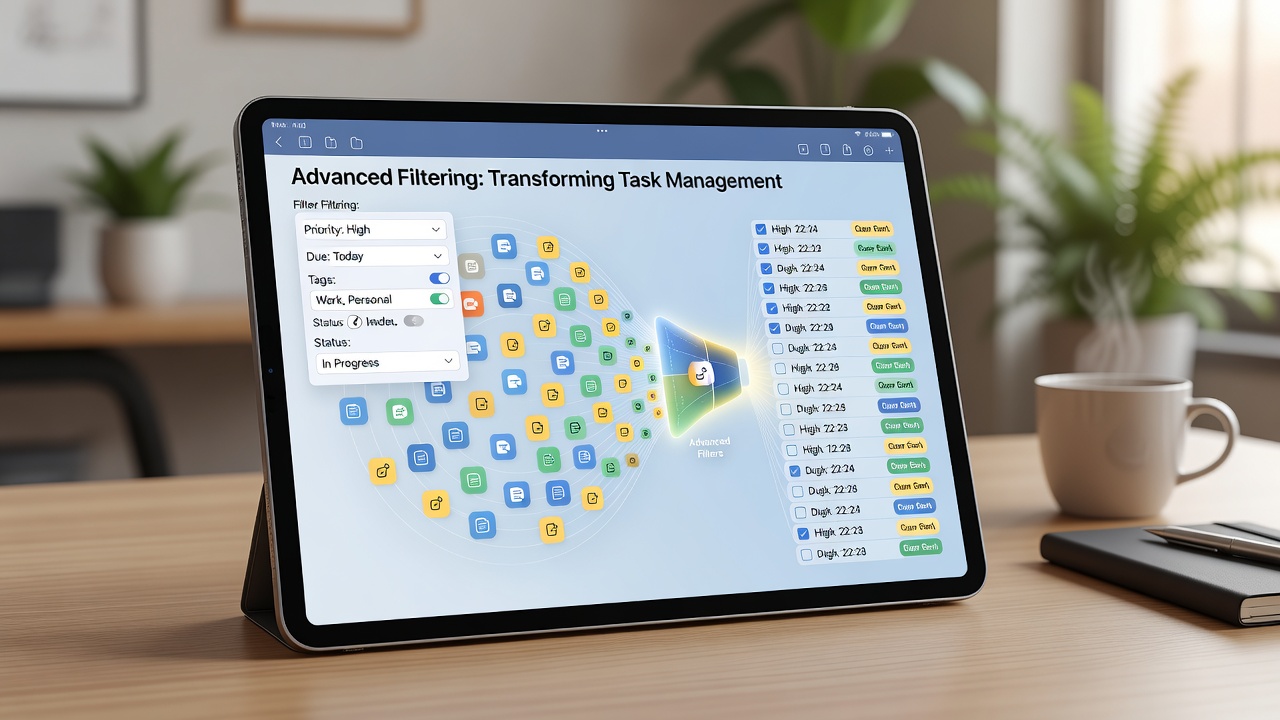
Advanced filtering options in note applications allow users to sort and retrieve tasks based on multiple criteria such as tags, due dates, priority levels, and custom properties, which streamlines daily workflows by reducing the time spent searching through large collections of notes. These features integrate with task management systems to create dynamic views that update automatically as new information is added, and they support operators like AND, OR, and NOT for precise queries that isolate relevant items quickly.
Users often combine date ranges with status indicators to focus on overdue or upcoming items, while priority filters help surface high-impact tasks amid routine entries. Data from productivity studies indicates that such tools cut down on manual sorting by up to 40 percent in professional settings, according to findings reported by the Australian Bureau of Statistics on digital workflow efficiency. Applications like Notion and Obsidian have expanded these capabilities through database views that let teams apply filters across shared projects without altering the underlying content.
Core Components of Filtering Systems
Filtering begins with metadata assignment where notes receive attributes including labels for categories, deadlines, and assignees, and this setup enables layered searches that pull together related tasks from disparate sections. Researchers at the University of Toronto have documented how property-based filters outperform basic keyword searches by allowing exclusion of completed items or inclusion of recurring patterns, which proves especially useful in long-term project tracking.
Boolean operators add another dimension by letting people construct queries that match several conditions simultaneously, whereas saved filter presets allow quick access to common task groupings like weekly reviews or client-specific lists. In October 2026 several platforms rolled out enhanced AI-assisted suggestions that recommend filter combinations based on usage patterns, further accelerating the process of locating actionable items.
Impact on Daily Task Organization
Daily routines benefit when filters highlight dependencies between tasks, such as linking preparatory steps to final deliverables through relational properties that surface only when prerequisites reach certain statuses. Observers note that this relational approach minimizes context switching, since users can maintain focus on one filtered subset while the broader database remains intact and accessible.
Case examples from corporate environments show that teams using priority and deadline filters report clearer visibility into workload distribution, and integrated calendar views often pull filtered tasks directly into scheduling tools. Evidence from labor statistics compiled by Statistics Canada links consistent use of these features to measurable reductions in missed deadlines across knowledge work sectors.
Integration With Collaboration Features
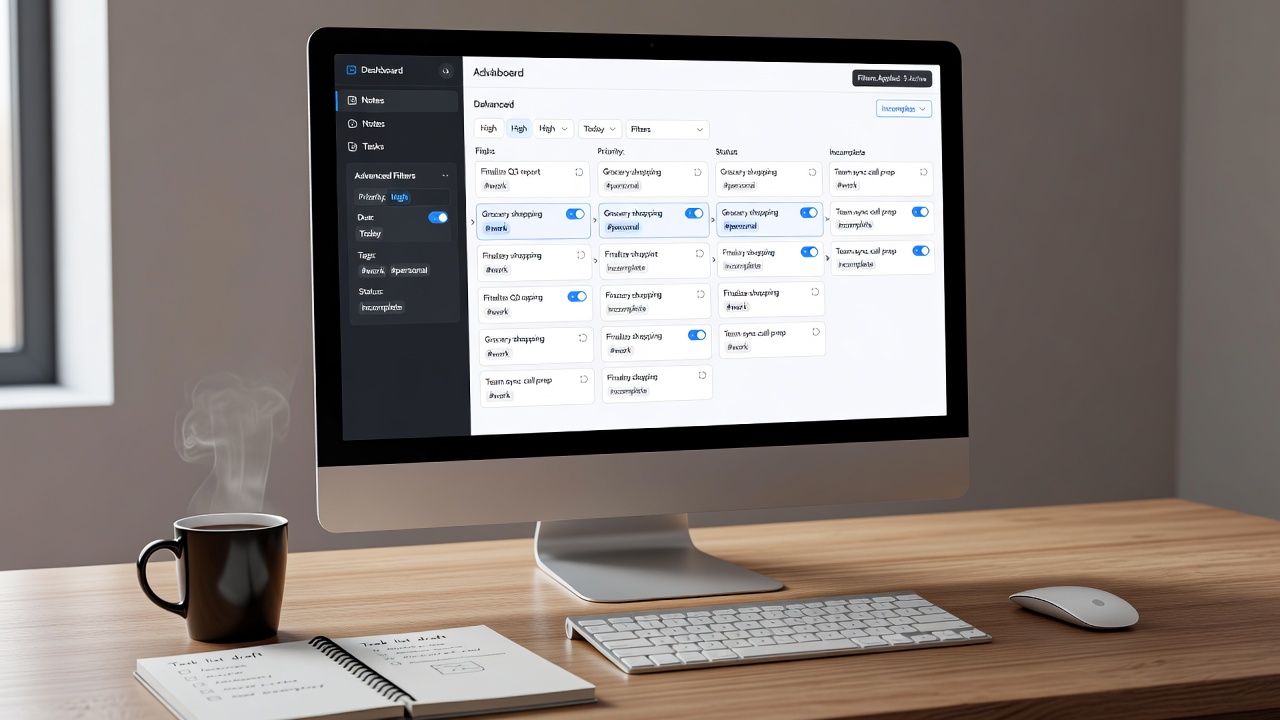
Shared note spaces gain efficiency when filters respect permission levels so that team members see only tasks assigned to them or those marked for group review. Advanced setups allow conditional formatting that colors or groups items based on filter results, making it easier to spot bottlenecks during stand-up meetings or progress reviews.
Export options tied to filtered views let users generate reports without exposing unrelated data, and version histories remain filterable to track changes within specific task subsets. Industry reports from the OECD highlight how these collaborative filtering layers support distributed teams by maintaining clarity across time zones and varying work schedules.
Technical Considerations and Adoption Trends
Performance scales with database size, yet most modern note applications index filters client-side to keep queries responsive even when handling thousands of entries. Developers have introduced query languages that extend beyond simple tags to include formulas and rollups, enabling calculations such as average completion times within filtered sets.
Adoption data shows steady growth in filter usage among both individual users and enterprises, driven by mobile access where quick filters compensate for smaller screens. Training resources from academic institutions emphasize starting with core properties before expanding to complex queries, which helps new users avoid overwhelm while building proficiency.
Conclusion
Advanced filtering options continue to evolve as note applications incorporate more relational and automated capabilities, transforming how individuals and groups handle daily task loads through precise retrieval and dynamic organization. The combination of metadata, operators, and preset views creates systems that adapt to changing priorities without requiring constant manual upkeep, and ongoing platform updates ensure these tools remain aligned with emerging workflow demands.