Mara Neumann · 18 September 2026
Navigating Data Recovery Challenges in Personal Knowledge Base Tools During Service Transitions
Personal knowledge base tools store notes, documents, and structured information for individual users, and service transitions occur when people move from one platform to another because of pricing changes, feature updates, or company acquisitions. These shifts create risks for data integrity since different tools rely on proprietary formats, synchronization protocols, and backup methods. Research from the National Institute of Standards and Technology outlines standard procedures for data portability that reduce loss during such moves, while figures from the Australian Cyber Security Centre indicate that incomplete exports account for a significant portion of recovery failures in consumer software.
Common Data Formats and Their Limitations
Many personal knowledge base applications support export options such as Markdown, HTML, JSON, or XML, yet compatibility varies widely across platforms. When a user attempts to import data into a new service, metadata like tags, links between notes, and embedded attachments often fail to transfer correctly because the receiving tool interprets the structure differently. Data shows that attachments stored as binary files require separate handling during migration, and observers note that timestamp information can shift if time zones or file systems do not align between the old and new environments.
Backup Strategies Before Transition
Users who maintain local copies of their knowledge bases before initiating a service change increase their chances of successful recovery. Automated backup features built into tools like Obsidian or Logseq create versioned archives on external drives or encrypted cloud storage, and these archives allow restoration even if the original service becomes unavailable. Studies from university research groups have found that combining full database exports with incremental file-level backups covers both structured data and individual assets more effectively than relying on a single method alone.
Technical Challenges During Migration
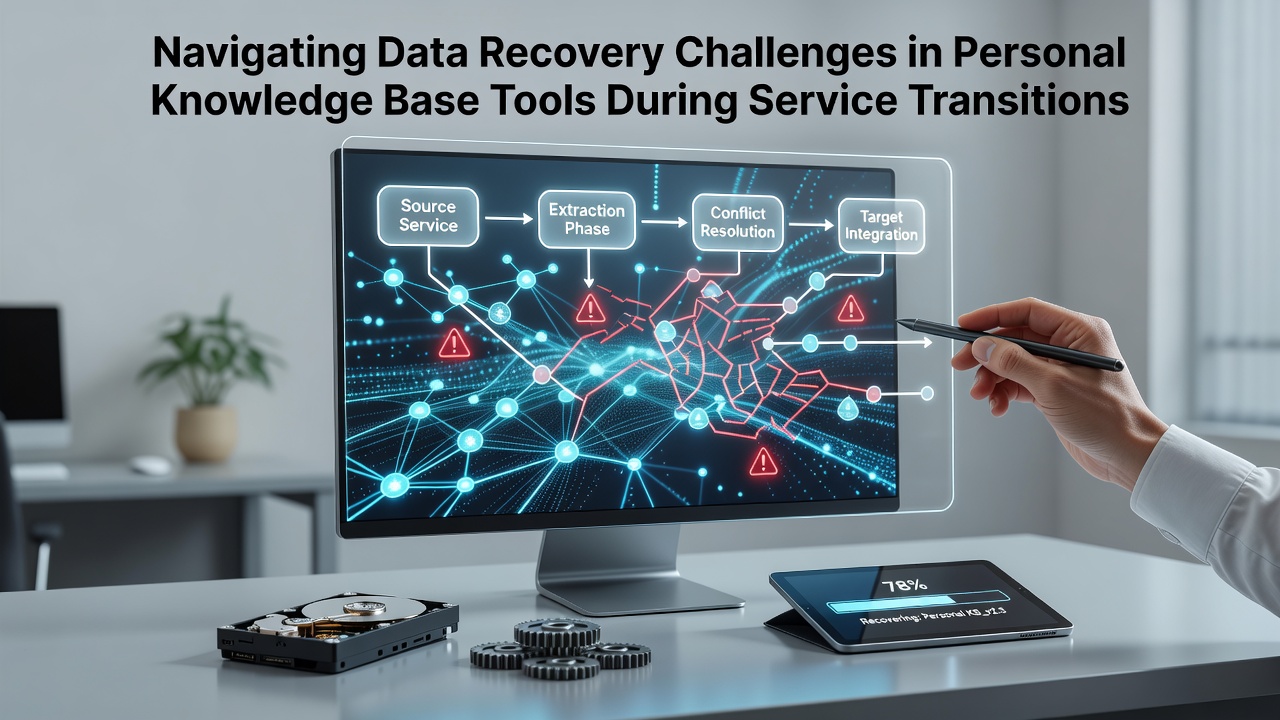
Service transitions frequently involve API rate limits, authentication token expirations, and differences in how each platform handles hierarchical note structures. When one system uses nested folders while another relies on bidirectional links, the conversion process can break relational data and create orphan notes that lack context. In September 2026, updated data portability regulations in several jurisdictions are expected to require clearer export documentation from service providers, which may ease some of these technical hurdles for users who plan migrations in advance.

Encryption keys present another layer of difficulty because some tools encrypt data at rest using device-specific credentials. If a user loses access to the original device or forgets the passphrase during transition, recovery becomes impossible without a separate key backup. Reports from the European Union Agency for Cybersecurity detail cases where encrypted personal databases required forensic recovery tools after service shutdowns, and those tools succeeded only when users had previously exported the decryption material separately.
Recovery Tools and Professional Assistance
Specialized recovery software exists for common knowledge base formats, and open-source utilities can reconstruct Markdown repositories or SQLite databases when standard import functions fail. People who encounter corrupted files after a transition often turn to these utilities first because they operate offline and avoid further interaction with the discontinued service. When automated tools prove insufficient, data recovery specialists apply techniques such as file carving and database repair scripts, though success rates depend on the extent of overwrite operations that occurred on the storage medium.
Prevention Through Documentation
Maintaining a separate index of note titles, tags, and external links outside the primary knowledge base provides a reference point during recovery efforts. This index, stored in a plain text file or spreadsheet, allows users to verify completeness after import and to reconstruct broken connections manually if automated linking fails. Industry reports emphasize that documenting export settings and file locations before each transition reduces the time required to locate missing assets once the new service is active.
Conclusion
Service transitions in personal knowledge base tools introduce measurable risks to data continuity, yet structured preparation and awareness of format limitations allow most users to complete migrations with minimal loss. Continued development of open standards for note interoperability, combined with regulatory requirements for clearer export procedures, offers pathways to smoother transitions in the coming years.